

Sports Injury Rehab: A Chiropractor for Athletes & Active Adults
From “it hurts when I…” back to the thing you were doing when it started.
By Dr. Abby Dante, DC NY License #013032 Last updated

Should an athlete see a chiropractor for a sports injury?
For most strains, sprains, tendon pain and joint pain that come from training, yes, as long as the chiropractor does more than adjust you. A sports injury is rarely only a joint problem. It's a tissue that was asked to do more than it was ready for. Getting back means calming it down, then building it back up until it can take your sport again.
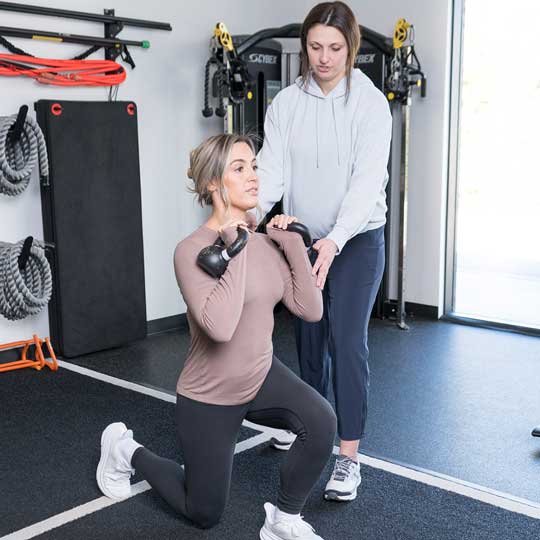
That's how we work. Every plan combines manual therapy, movement assessment, strength-based rehabilitation and patient education, one-on-one, in visits of 30-60 minutes. Active humans require active treatment.
It isn't the right first stop for every injury. If you heard a pop and the joint gave way, can't put weight on it, see obvious deformity, or hit your head, go to urgent care, an orthopedist or the emergency room first. We're happy to pick up the rehab once you've been cleared.

What is a movement assessment?
A movement assessment is us watching you move before we put hands on you. We analyze your movement patterns to identify potential pain generators: what you avoid, where you compensate, and which movement actually brings your symptoms on. It's the first part of your first visit, not a separate appointment.
What we look at depends on your sport and your complaint. It may include how you squat, hinge, lunge, reach overhead, balance on one leg, or land from a small jump, plus the specific movement that hurts. A pitcher, a deadlifter and a pickleball player will not get the same assessment.
It matters because where it hurts is often not where the problem starts. A knee that aches on every lunge may be working around a stiff ankle or a hip that isn't doing its share. Treat only the knee and it comes back. The assessment also gives us a baseline, so we re-test the same movements later and both of us can see whether the plan is working.

What does sports injury rehab involve?
There's no single protocol, but most plans move through the same three stages.
1. Calm it down
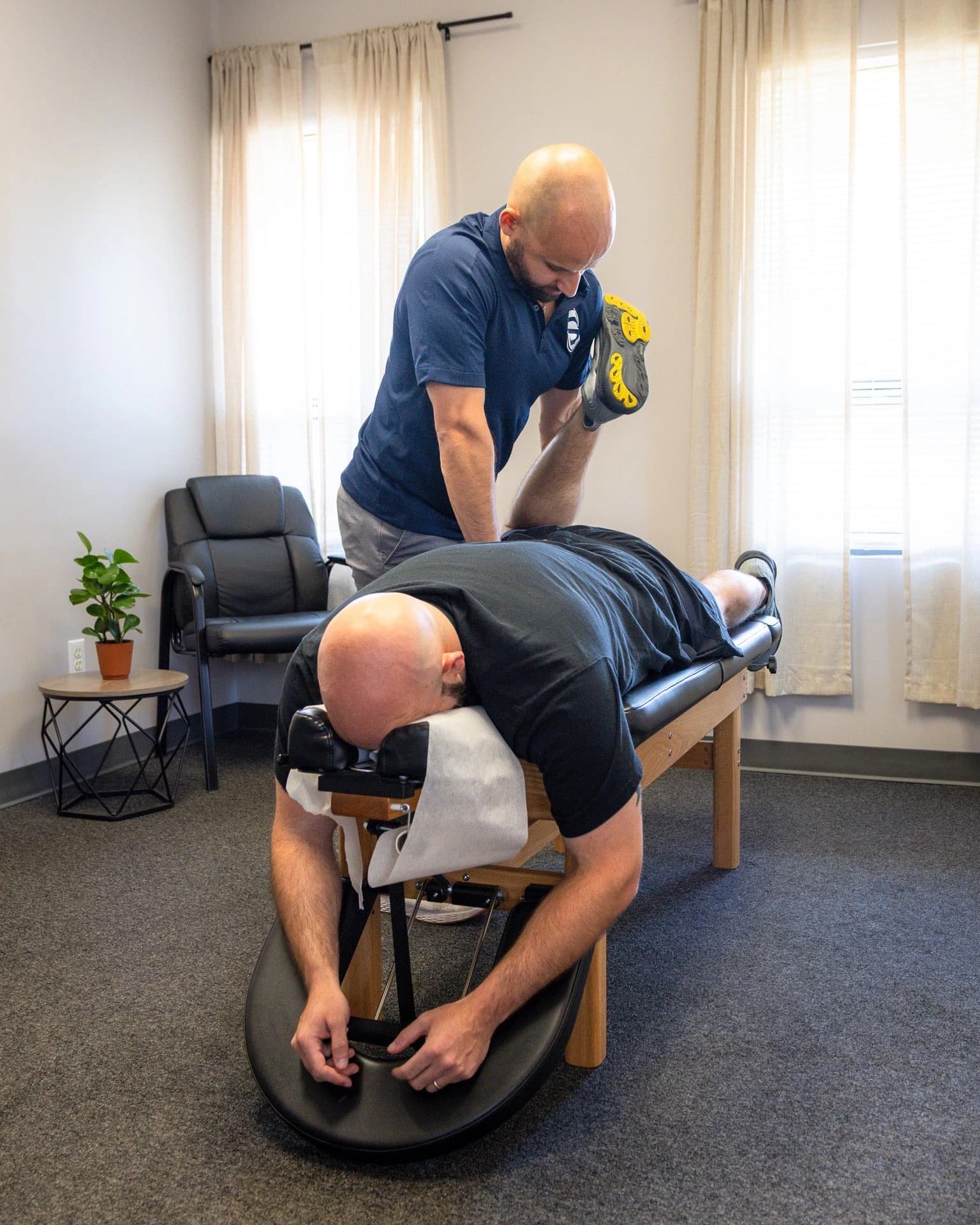
Early on, the goal is less pain and more comfortable movement. This is where hands-on manual therapy does the most: soft tissue work, joint mobilizations and adjustments. We also change your training instead of stopping it. Full rest is rarely the answer. Finding what you can still do usually is.
2. Build it back up
Tissue gets more tolerant by being loaded, a little more each week. Each patient leaves with an exercise prescription. The exercises aim to be simple and realistic, and specific to you and your goals. If you already lift, we'll work with your program rather than replace it.
3. Return to sport
Pain-free on the table is not the same as ready to play. The last stage looks like your sport: speed, impact, rotation, overhead work, volume. We agree on what you need to be able to do before you go back, and we test it.
What if I need a scan?
If your exam points to a fracture, a full tear or anything else that would change the plan, we'll tell you and send you to the right provider before we go further. For why a scan is only one piece of the puzzle, read Dr. Abby on whether you need an MRI for back pain.
Is it OK if rehab hurts a little?
Some discomfort while you rebuild is normal and isn't a sign of harm. You'll get a simple rule for how much is acceptable for your injury, so you aren't left guessing between pushing through and backing off.
How long will it take?
That depends on the injury, how long you've had it and what you're going back to. We won't put a number on it before we've examined you.

What kinds of athletes do you treat?
Athletes and active adults of every level. You don't need a team or a race on the calendar. Some groups have their own page, because their questions are different:
- Runners and running injuries: mileage, shoes, and whether you can keep running while it heals.
- Lifters, throwers and swimmers with overhead shoulder pain, and anyone whose back gives out on a deadlift, covered under lower back pain.
Dr. Abby studied exercise science before chiropractic school. Dr. Dave is an avid weightlifter who also plays golf and pickleball. You can read about both doctors' training and licenses.
We see patients in Islandia and in Quogue. Call or text 631-212-2996 to schedule. New patients can also apply for a free Discovery Visit with the button at the top of this page.
Book an appointment
I’m excited to work with you! Please call us at 631-212-2996 to get started.