

Chiropractor for Runners
The first thing every injured runner asks is whether they have to stop. Usually, no.
By Dr. Abby Dante, DC NY License #013032 Last updated

Can a chiropractor help with a running injury?
Yes, if the chiropractor treats it as a loading problem and not only a joint problem. Most running injuries aren't caused by something being out of place. They build up when mileage, pace or hills climb faster than your tissues can adapt. So the work is part hands-on treatment, part strength, and part adjusting your training so you can keep running while it settles.
That is what a runner's visit here looks like: we watch you move, treat what's sore, and send you home with a short strength plan and a clear answer on how much to run this week.

Do I have to stop running?
Usually not completely. For most overuse injuries, some running is fine and even helpful, as long as it stays under the level that flares things up. The rules of thumb we start from:
- Mild discomfort that stays level during the run, settles within a day and doesn't change how you run is generally acceptable.
- Pain that builds as you go, makes you limp or alter your stride, or is worse the next morning means that run was too much. Shorten it, slow it or flatten it.
- Change one thing at a time: distance, pace, hills or frequency. That way we learn which one your injury cares about.
- Keep your fitness with what doesn't hurt: cycling, pool running, the elliptical, strength work.
When you should stop and get it looked at first
Pinpoint pain on a bone (shin, foot, hip or groin) that hurts to press, aches at rest or at night, or gets worse with every run can be a stress fracture. That needs a medical doctor and imaging before any rehab, and running through it can turn a few weeks off into a few months. The same goes for a calf that is swollen, warm and tender, or any chest pain or fainting on a run: those are medical, not musculoskeletal.

What running injuries do you treat?
The complaints runners most often bring in:
- Pain around or behind the kneecap (runner's knee)
- Pain on the outside of the knee (IT band)
- Shin pain along the inner edge of the shinbone
- Achilles tendon pain and tight, sore calves
- Heel and arch pain, especially with the first steps in the morning (plantar fasciitis)
- Hip, glute and high hamstring pain
- A lower back that tightens up late in long runs
These have different names but a similar story: a tissue taking more load than it's ready for, often because something up or down the chain isn't sharing the work. Knee pain in a runner is frequently a hip or ankle question, which is why we look at all of it.
What does a runner's visit look like?
Your training comes first
Bring your log, or your watch or app. Weekly mileage, the long run, recent jumps in volume or speed, a new surface or new shoes, and an upcoming race all matter more than most runners expect. Bring your running shoes too.
Then how you move
Running is a series of single-leg hops, so we look at single-leg balance, a single-leg squat, calf raises, hip and ankle range, and whatever reproduces your pain.
What about my shoes?
Shoes matter less than the training log. No one type of shoe prevents injury for everyone, and comfort is a reasonable guide. What does matter is a sudden switch, for example to a much lower heel drop or a minimal shoe. That's a change in load like any other, so make it gradually.
Hands-on, then homework
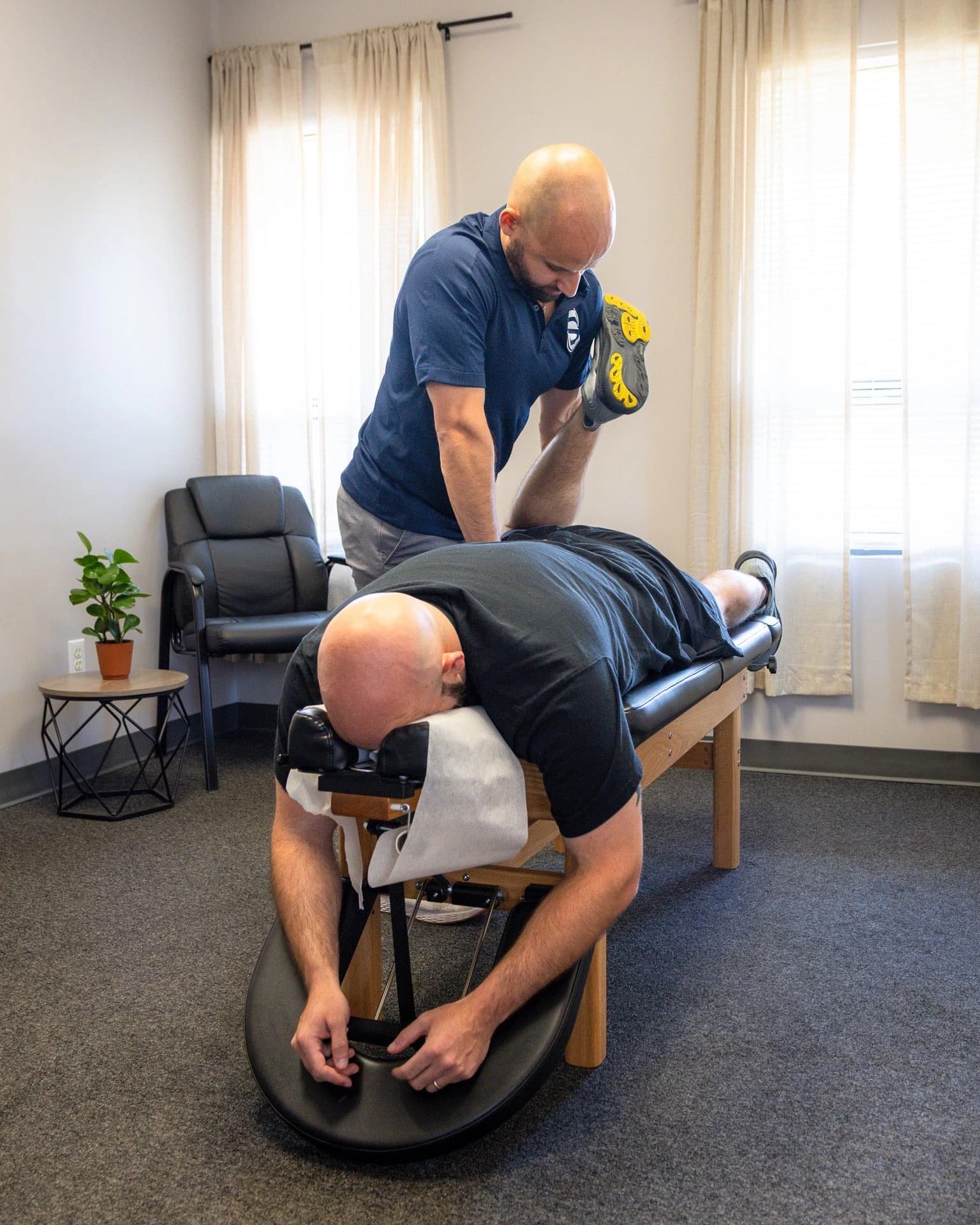
Soft tissue work and mobilization for what's tight or sore, then strength work. For runners that usually means calves, hips and single-leg control, loaded heavier than most runners are used to. The exercises aim to be simple and realistic. Two or three you'll actually do beat ten you won't.
A plan back to mileage
You leave knowing what to run this week and how to build from there. How fast that goes depends on the injury and how long you've had it, so we won't promise you a race date. We will tell you honestly where you stand.
Not a runner, or hurt in another sport? Our three-stage sports injury rehab page covers how we handle injuries in general. A lower back that tightens on long runs is covered on our lower back pain page.
You'll be seen one-on-one by Dr. Abby Dante or Dr. Dave Atlas (their training). Dr. Abby sees patients at our Islandia and Quogue locations. Dr. Dave sees patients in Islandia. Call or text 631-212-2996 to schedule.
Book an appointment
I’m excited to work with you! Please call us at 631-212-2996 to get started.