Clamshell
2 × 12 each side- Lie on your side, knees bent, heels together.
- Keep your feet touching and lift the top knee.
- Lower slowly without rolling your hips back.
An easy start for the muscles on the side and back of the hip.


Pain on the outside of the knee is often the IT band, especially if it starts partway through a run or on the way down a hill. Often, but not always. Here’s how to tell the difference, and what we do about it.
By Dr. Abby Dante, DC Last updated
The typical story: fine for the first part of a run, then the outside of the knee starts up at about the same point every time. It’s often worse running downhill, with a longer stride, or after sitting a long time with the knee bent (American Family Physician). It’s common in runners and cyclists, and hikers meet it on long descents too.
Weak hip abductors, the muscles on the side of the hip, seem to contribute to IT band syndrome, and strengthening them has improved symptoms (American Family Physician). A short program like this is where we often start, alongside cutting back the hills for a while.
An easy start for the muscles on the side and back of the hip.
Works the hip abductors more directly. Keep it slow; momentum does the work otherwise.
Strong glutes help control the leg as you land, on the flat and on the way down.
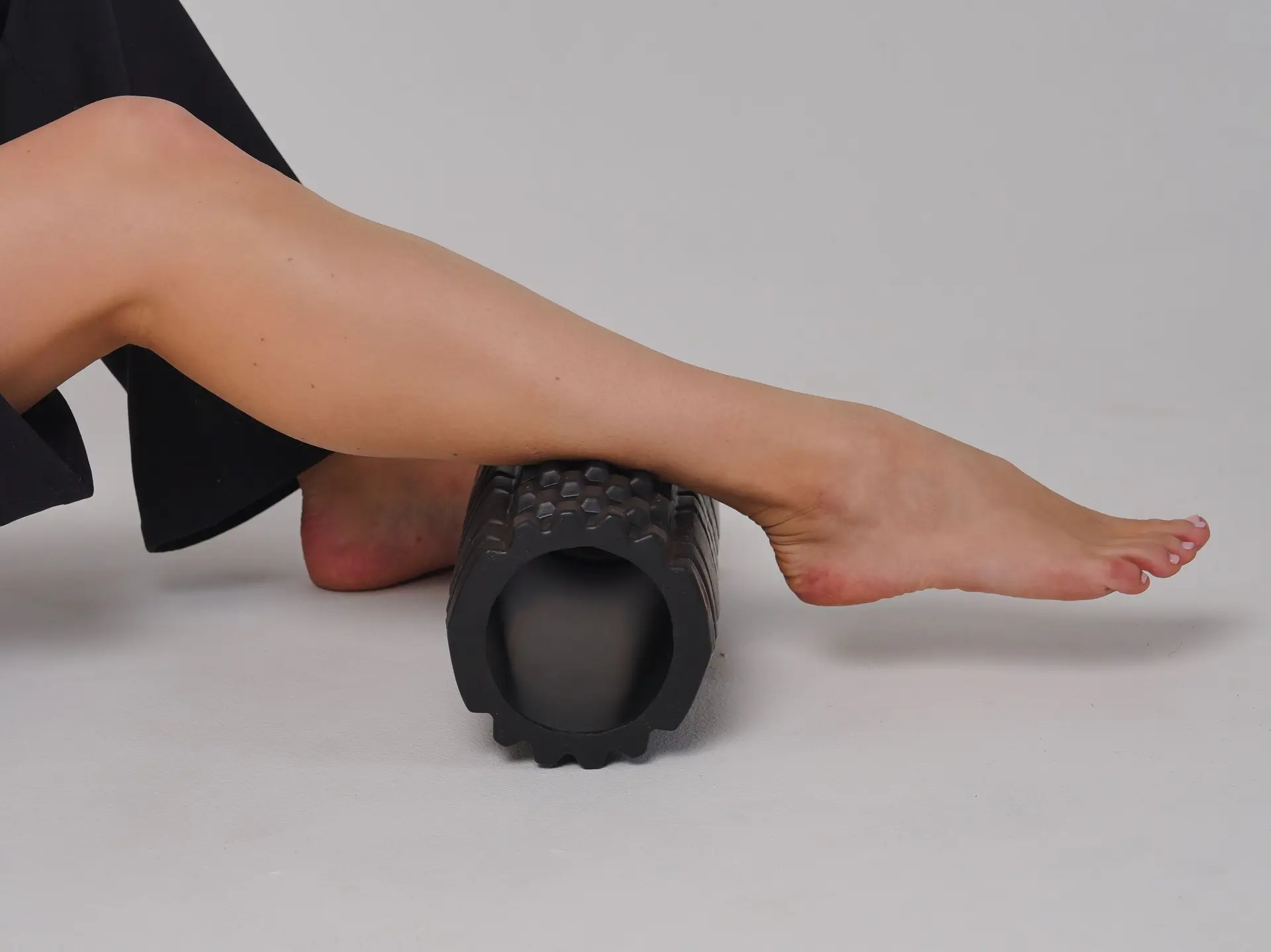
Comfort, not a fix. It can make the outside of the thigh feel easier for a while; the strength work above is what we rely on.
These are examples, not your plan. Every plan includes exercise-based rehab and a home exercise program written for you after an assessment. Stop any exercise that brings on sharp pain, numbness or tingling, and ask us first if you're not sure it suits you.
Outside knee pain has a short list of usual suspects. The American Family Physician review lists a lateral meniscus tear, a lateral collateral ligament (LCL) sprain and pain referred from the lower back among the other causes to rule out.
| Clue | IT band syndrome | Lateral meniscus | LCL sprain | From the hip or back |
|---|---|---|---|---|
| How it starts | Gradually, building over runs, rides or hikes | Often a twist or pivot; in older knees, even an awkward twist getting up from a chair | A force to the inside of the knee that pushes it outward | Gradually, often with back or hip symptoms |
| What it feels like | Aching or sharp pain on the outside of the knee, worse downhill | Pain, then stiffness and swelling over 2 to 3 days; catching or locking; the knee giving way | Pain on the outside of the knee, swelling, tenderness, a feeling of instability | An ache down the outside of the thigh or knee that changes with back or hip movement; sometimes tingling |
| Imaging? | Usually diagnosed by exam; MRI only if in doubt | MRI is the preferred way to diagnose an acute tear | MRI gives the best view of the ligament | Depends on the exam; numbness or weakness changes the plan |
| Who to see first | Us: load changes, hip strength, hands-on care | A physician first; rehab once it’s been assessed | A physician first; rehab once it’s been assessed | Us, unless there’s numbness, weakness, or bladder or bowel changes: then a physician first |
If your outside knee pain comes with back pain or pain down the leg, read sciatica and hip pain from running. If the knee can’t take weight, is badly swollen or has changed shape, or is hot and red with a fever, get urgent care the same day (NHS: knee pain).
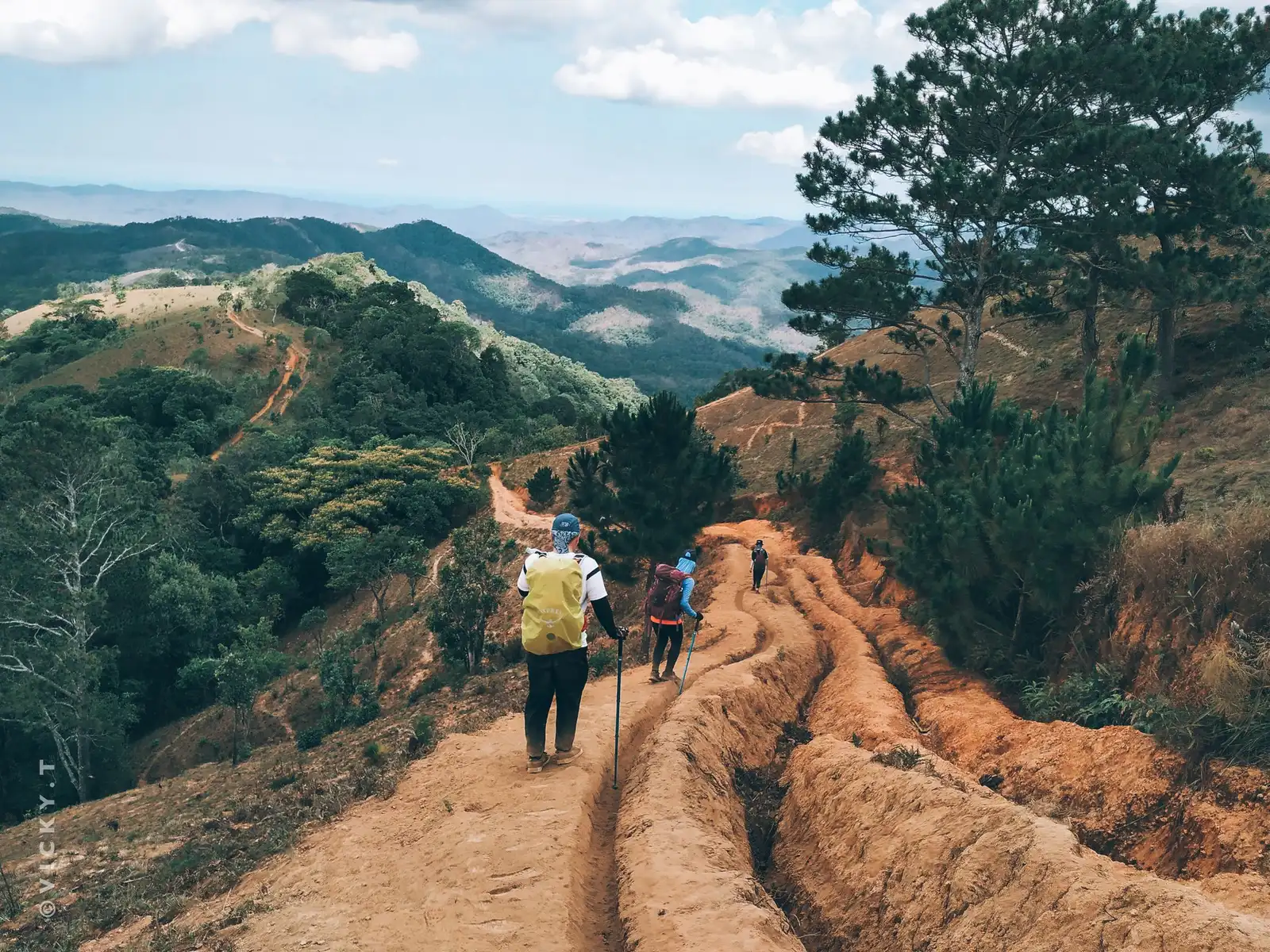
Downhill is where the IT band gets the most work: the knee bends and straightens under load again and again, and every step is a brake. Cleveland Clinic lists running downhill as one of the things that makes the band rub, and advises avoiding hills and slanted surfaces while it settles. Outside knee pain hiking downhill follows the same logic, with a pack and uneven ground added.
While it calms down, shorten your steps on descents, use poles if you have them, lighten the pack, and break long descents up with flat sections. Then build the hills back gradually. Our guide to knee pain running downhill has a downhill technique drill and a stairs-to-trail progression, and knee pain after running maps the other spots a runner’s knee can hurt.
We don’t have an office in Ronkonkoma; Ronkonkoma patients drive over to our Islandia office at 1777 Veterans Memorial Highway, open weekdays until 8pm and Saturday mornings. Dr. Abby Dante and Dr. Dave Atlas both see patients there. Details are on our Islandia office page and the drive from Ronkonkoma.
On the East End, Dr. Abby sees patients at our Quogue office, inside Studio 7 Pilates at 164 Jessup Avenue, a short drive from Westhampton and Westhampton Beach. Call or text 631-212-2996 to book a Quogue time.
Either way, a visit is one-on-one and 30 to 60 minutes: a movement assessment, hands-on care where it helps (see manual therapy), and a home exercise program. More on how we work with runners.
The most common reason in runners is IT band syndrome: the band of tissue down the outside of the thigh gets irritated where it passes the bone at the side of the knee. It often comes on partway into a run and is worse downhill. If it came on with a twist, swells, or catches, it's more likely something inside the joint, and that needs a physician first.
If it feels good, go ahead, gently. Treat it as comfort, not a fix. What we rely on is changing the load (fewer hills and long runs for a while) and building the hip strength that helps control the knee. Rolling hard into a sore spot isn't required to get better.
It varies with how long it's been going on and how much you keep poking it, so we won't promise a timeline before an exam. Cleveland Clinic advises contacting a healthcare provider if knee or hip pain doesn't get better after a few weeks, or gets worse. In the meantime, keep running on the flat if it's comfortable and skip the hills.
Usually not for IT band syndrome, which is diagnosed from your history and exam. MRI is used when the diagnosis is in doubt or a problem inside the joint, like a meniscus tear, is suspected. We don't take X-rays or scans in the office: if your exam points that way, we refer you out for imaging. For backs, see do I need an MRI for back pain?
New patients can apply for a free Discovery Visit.
Photo credits: stock scenes by Vicky Tran (Pexels) and Nadin Sh (Pexels). Stock photos show models, not our doctors, patients or offices. All credits.