Calf raise
3 × 12–15- Stand holding a counter for balance.
- Rise up onto the balls of both feet.
- Lower slowly, taking about three seconds.
Calves that can take more load ask less of the shin. Progress to one leg at a time when two feels easy.


Usually because the shin is taking more load than it's ready for: more miles, more speed or harder ground, too soon. Here's how long to rest, and how to tell shin splints from a stress fracture.
By Dr. Abby Dante, DC Last updated
Most runners ask this first, so here it is first. These ranges are general guidance from the American Academy of Orthopaedic Surgeons and Cleveland Clinic, not a schedule: your own timeline depends on how long it has been going on.
Stop the runs that hurt. Walking around as normal is fine if it doesn't hurt. Swimming or cycling can keep your fitness going in the meantime (AAOS).
Standard treatment is several weeks of rest from the activity that caused the pain (AAOS), and most shin splints get better in a few weeks with rest and home care (Cleveland Clinic). Use this time to build calf and hip strength.
Be pain-free for at least 2 weeks before you return to exercise (AAOS). We take pain-free to mean walking, stairs and everyday life, not only sitting still.
Short, easy, flat runs first, and increase slowly. If the pain comes back, stop, ice it and rest a day or two (AAOS), then restart a step lower.
Not improving after a week or two of rest? See a healthcare provider (Cleveland Clinic), and run through the stress fracture check below.
Shin splints, or medial tibial stress syndrome, is inflammation of the muscles, tendons and bone tissue around the tibia, your shin bone (AAOS). The pain runs along the inner edge of the bone. It can be sharp or dull, come during or after a run, and the sore area is often tender to touch, sometimes with mild swelling.
The common thread is load rising faster than the leg can adapt. The runners we see with sore shins have usually changed something in the weeks before: a new training plan, a jump in weekly miles, more speed work, more running on roads or a track, or new shoes. A first race, like a turkey trot, is a classic trigger.
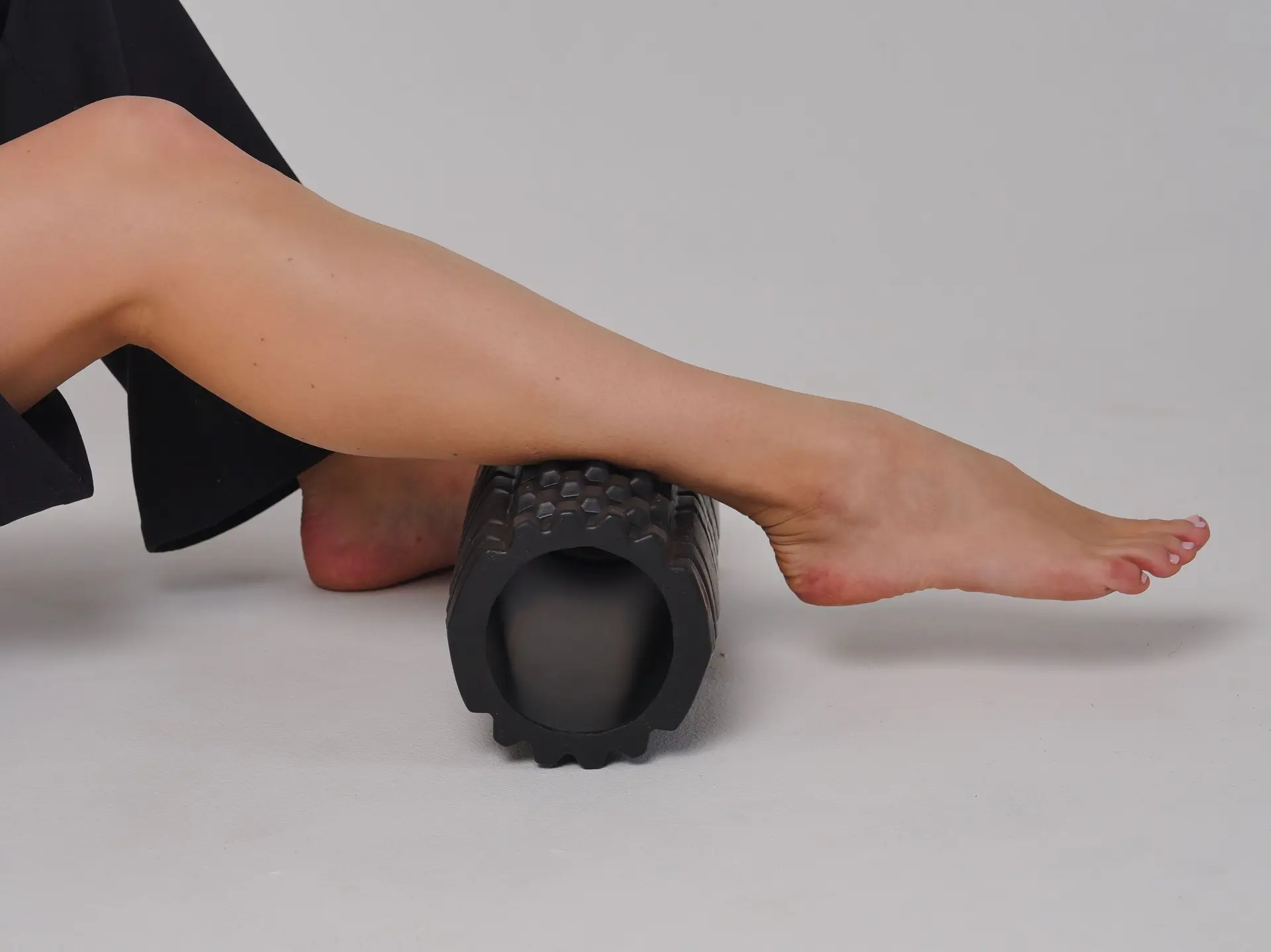
A foam roller on the calves can feel good, but it doesn't fix the load. What does is a short break from running, strength in the calves and hips, and a gradual return. That's what a visit here focuses on: a one-on-one assessment of how you move and how you land, hands-on care for the calf and lower leg, and a home exercise program. Our sports injury rehab page explains the approach.
Pain somewhere else? See heel pain after running, knee pain after running or outside knee pain and the IT band.
Pushing through shin splints can raise your risk of a stress fracture, a small crack in the tibia (Cleveland Clinic). You can't tell them apart for certain without an exam and sometimes imaging, but these signs point one way or the other.
Tenderness along a stretch of the inner shin bone, rather than one spot, with little or no swelling, is the typical shin splints picture (American Family Physician). It often eases as you warm up and comes back after the run.
This is the one we see most, and the timeline above applies.
Focal tenderness on the bone, sometimes with swelling there, is more typical of a stress fracture (American Family Physician). Stop running and see a physician, who can order imaging.
A bone stress injury starts as pain during or after activity, and as it gets worse it can hurt with everyday walking and ache at night (AAOS). Pain that no longer needs a run to set it off should be checked by a physician as soon as possible.
Sharp, localized pain when you hop on one leg is a reason to get a stress fracture ruled out. It isn't a diagnosis on its own: a painful hop was also found in nearly half of people with suspected shin splints (American Family Physician), which is why a physician and imaging make the call.
Shin pain with swelling, numbness or tingling should be seen sooner (Cleveland Clinic). See a physician before you start treatment here.
A calf that is swollen, warm or red, or a leg you can't put weight on after a fall or a twist, needs urgent medical care, not a wait-and-see.
Examples of the low-impact strength work a home program for sore shins often includes, done while you rest from running.
Calves that can take more load ask less of the shin. Progress to one leg at a time when two feels easy.
Works the muscles on the front of the shin, which control how your foot lands.
Balance work trains the foot, ankle and hip to control landing, which takes some load off the shin.
Keeps the legs strong with no impact while you rest from running.
These are examples, not your plan. Every plan includes exercise-based rehab and a home exercise program written for you after an assessment. Stop any exercise that brings on sharp pain, numbness or tingling, and ask us first if you're not sure it suits you.
Long enough to be pain-free for at least 2 weeks before you run again, according to the American Academy of Orthopaedic Surgeons, which describes several weeks of rest from the activity that caused the pain as standard treatment. Most shin splints get better in a few weeks. It depends on how long you've had them and how hard you've pushed through: a first episode caught early usually settles faster than one that has gone on for months.
Rest from running doesn't mean rest from everything. Cycling, swimming and strength work are usually fine.
We'd advise against it. Pushing through the pain to keep running can increase your risk of a stress fracture in the shin bone, according to Cleveland Clinic. Cut back or cross-train while it settles, then build back slowly. Our chiropractor for runners page covers how we keep runners in training while they recover.
If it hasn't improved after a week or two of rest, see a healthcare provider. See a physician first, before treatment here, if the pain is in one spot on the bone, if it's there at rest or at night, if hopping on that leg is sharply painful, or if there's swelling, numbness or tingling. Those are signs of a possible stress fracture or another problem that needs imaging.
Our office isn't in Commack. It's in Islandia, southeast of Commack, and open weekday evenings to 8pm and Saturday mornings, so a run-then-appointment or work-then-appointment day is easy to fit. East End runners can see Dr. Abby at our Quogue office, inside Studio 7 Pilates. Call or text 631-212-2996 to book either one.
Call or text 631-212-2996 to book in Islandia or Quogue.
1777 Veterans Memorial Highway Suite 22, Islandia NY 11749. Mon–Fri 8:00am–8:00pm, Sat 7:00am–1:00pm. Dr. Abby and Dr. Dave.
164 Jessup Ave, Quogue NY 11959. Inside Studio 7 Pilates, with Dr. Abby.
New patients can apply for a free Discovery Visit: apply online (opens in a new tab).
Photo credits: stock scenes by Tima Miroshnichenko (Pexels) and Nadin Sh (Pexels). Stock photos show models, not our doctors, patients or offices. All credits.